Sponsored article
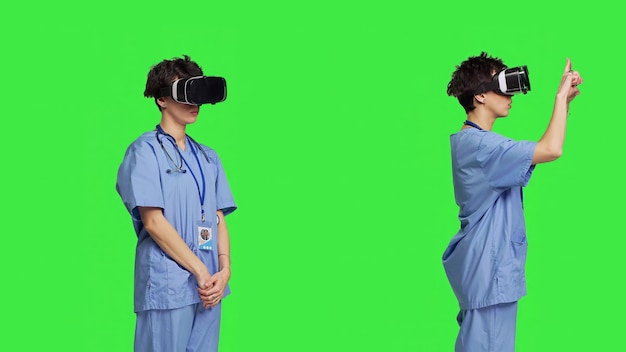
In the fast-paced world of healthcare, effective collaboration among teams is crucial to ensure efficient patient care and outcomes. As technology continues to evolve, immersive training has emerged as a transformative tool, reshaping how medical professionals communicate and work together. By simulating real-life scenarios through virtual reality and other innovative methods, healthcare teams can develop vital skills that enhance cooperation and streamline operations, ultimately leading to better patient care.
Immersive training has emerged as a pivotal component in enhancing teamwork within healthcare settings, leveraging cutting-edge technologies like virtual reality and simulation to create realistic scenarios that optimize collaboration. By simulating real-world situations, teams can experience high-pressure environments safely and develop crucial communication skills essential for effective teamwork. This approach facilitates an understanding of each team member’s role, promoting coordination and reducing potential errors in actual clinical practice. Through interprofessional simulation training healthcare professionals can practice handling complex cases together, fostering mutual respect and a deeper understanding of diverse expertise. Tools like VR offer a platform for repeated practice, allowing healthcare professionals to reflect on their performance and refine their skills collaboratively. The benefits of immersive training extend beyond individual skill enhancement, contributing to a culture of shared learning and continuous improvement across healthcare teams, thereby transforming collaboration practices for improved patient outcomes.
Embracing immersive technology provides a transformative avenue for enhancing communication skills among healthcare professionals, crucial for optimizing patient care. By simulating real-life scenarios, interactive training platforms offer healthcare teams the unique opportunity to engage in lifelike experiences that hone their interpersonal abilities. For instance, virtual reality simulations can place practitioners in complex medical scenarios requiring nuanced communication and precise coordination. Such training fosters an environment where doctors, nurses, and other medical staff can practice delivering critical information clearly and effectively, thereby reducing misunderstandings in high-stakes situations. Augmented reality tools also contribute by overlaying digital cues on real-world settings, enabling team members to collaborate seamlessly and understand each other’s roles in patient management. Through these innovative approaches, immersive technology not only enhances individual communication skills but also strengthens the collective efficacy of healthcare teams in delivering exceptional patient care.
The integration of immersive learning into healthcare training heralds a new era of heightened efficiency and improved patient outcomes. This innovative approach serves as a catalyst for healthcare improvement by fostering collaborative practice among multidisciplinary teams. Through immersive learning technologies such as virtual reality simulations and augmented reality applications, healthcare professionals can engage in realistic, interactive scenarios that replicate complex clinical environments. This hands-on experience enhances skills, confidence, and decision-making capabilities, leading to more efficient and accurate diagnoses and treatments. By promoting a collaborative practice ethos, immersive training encourages communication and coordination among team members, ensuring seamless integration of care delivery. Consequently, patient outcomes are significantly enhanced as teams work cohesively to implement best practices and respond adeptly to patient needs. The synergy between immersive learning and collaborative practice not only elevates the level of care but also optimizes operational efficiency, ultimately transforming the landscape of healthcare services.