Sponsored article
The food packaging industry is ever-evolving, driven by the need for greater efficiency and precision. Custom automation solutions are at the forefront of this evolution, empowering businesses to streamline operations and enhance productivity. By tailoring automation to specific needs, companies can achieve significant improvements in output and quality while reducing costs and minimizing waste. In this article, we explore how these innovative systems are revolutionizing food packaging processes, offering insights into their numerous advantages and applications.
Custom automation in food packaging offers numerous advantages that significantly enhance food packaging efficiency. By adopting these tailored solutions, businesses can experience a variety of benefits that lead to optimized operations. Firstly, custom automation allows for improved efficiency by streamlining production lines, reducing bottlenecks, and enhancing throughput. This is particularly valuable in the fast-paced food industry, where timely delivery and consistency are critical. Moreover, automation minimizes manual handling, reducing human error and ensuring higher precision in packaging processes. This leads to a noticeable decrease in operational downtime and maintenance requirements. Rafpol Distribution LTD, a leading provider of these solutions, offers expert integration services to maximize these efficiencies.
The benefits of automation extend beyond just increased speed and accuracy. Companies often see significant cost savings due to lower labor costs and decreased material waste. Automated systems are designed to use only necessary resources, which helps in waste reduction and sustainability efforts. Furthermore, the use of automation contributes to enhanced safety by eliminating many of the manual processes that could pose risks to workers. Automation also brings the advantage of scalability, allowing businesses to easily adjust to fluctuations in demand. With these compelling benefits, it is no wonder that industry leaders are turning to tailored solutions from experts like Rafpol Distribution LTD to stay ahead in today’s competitive market.
Tailored automation systems are pivotal in revolutionizing food packaging by integrating process optimization and advanced technology. These bespoke systems are meticulously designed to meet the unique needs of each packaging operation, ensuring that every stage of the process is streamlined for maximum efficiency. Through the application of cutting-edge technology in food packaging, such systems can seamlessly automate repetitive tasks, minimize human error, and enhance overall output. This technological integration not only speeds up production cycles but also maintains consistent quality, which is crucial in the highly competitive food industry.
Moreover, tailored automation systems leverage real-time data analytics to monitor and adjust packaging workflows dynamically. By harnessing IoT devices and AI-driven insights, these systems can predict potential bottlenecks and proactively recalibrate processes to avoid disruptions. This forward-thinking approach to process optimization allows companies to respond swiftly to market demands and regulatory changes, thereby bolstering their agility and competitiveness. As innovation in technology continues to advance, the role of customized automation solutions in food packaging will undoubtedly expand, offering improved efficiencies and cost reductions.
In examining the transformative impact of custom automation solutions on efficiency within food packaging, several case studies and real-world examples stand out. One such example is a mid-sized canned food manufacturer, which integrated a custom-built robotic system to handle the sorting and packing of their products. Before automation, the company struggled with bottlenecks and inefficiencies. However, the implementation of this system allowed them to increase throughput by 40% while simultaneously reducing labor costs by 25%. Similarly, a prominent dairy producer utilized an automated quality control system tailored specifically to their production line’s requirements. This successful automation in food packaging enabled the company to enhance product consistency, resulting in a 30% decrease in returns due to packaging errors.
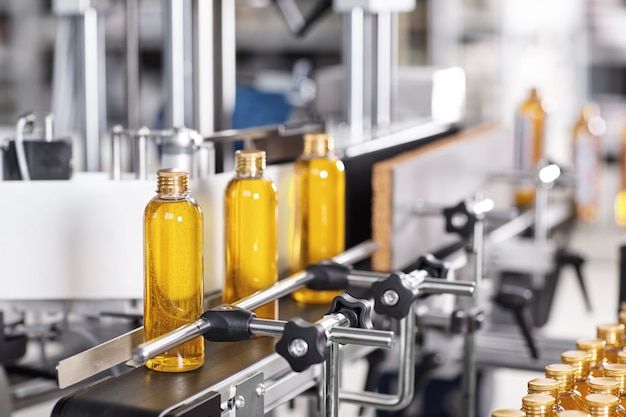
Another noteworthy real-world example comes from a snack food company that heavily invested in a tailored conveyor system. This company faced frequent downtime due to the manual handling of products, which was both time-consuming and prone to errors. By adopting a custom automation solution, they managed to cut downtime by 50%, significantly boosting both productivity and employee morale. Such case studies exemplify how strategic investments in tailored automation can lead to profound shifts in operational efficiency, propelling companies towards more streamlined, cost-effective, and reliable production processes. These successful automation in food packaging stories underscore the importance of considering customized solutions to tackle unique challenges within the industry.